Our Process
From Paddy to Dispatch, Every Step Accounted For
Every batch moves through the same controlled, 12-step sequence — sourced, inspected, dried, milled and tested — before it is ever packed for a customer.
-
 01
01
Step 01 of 12
Paddy Procurement
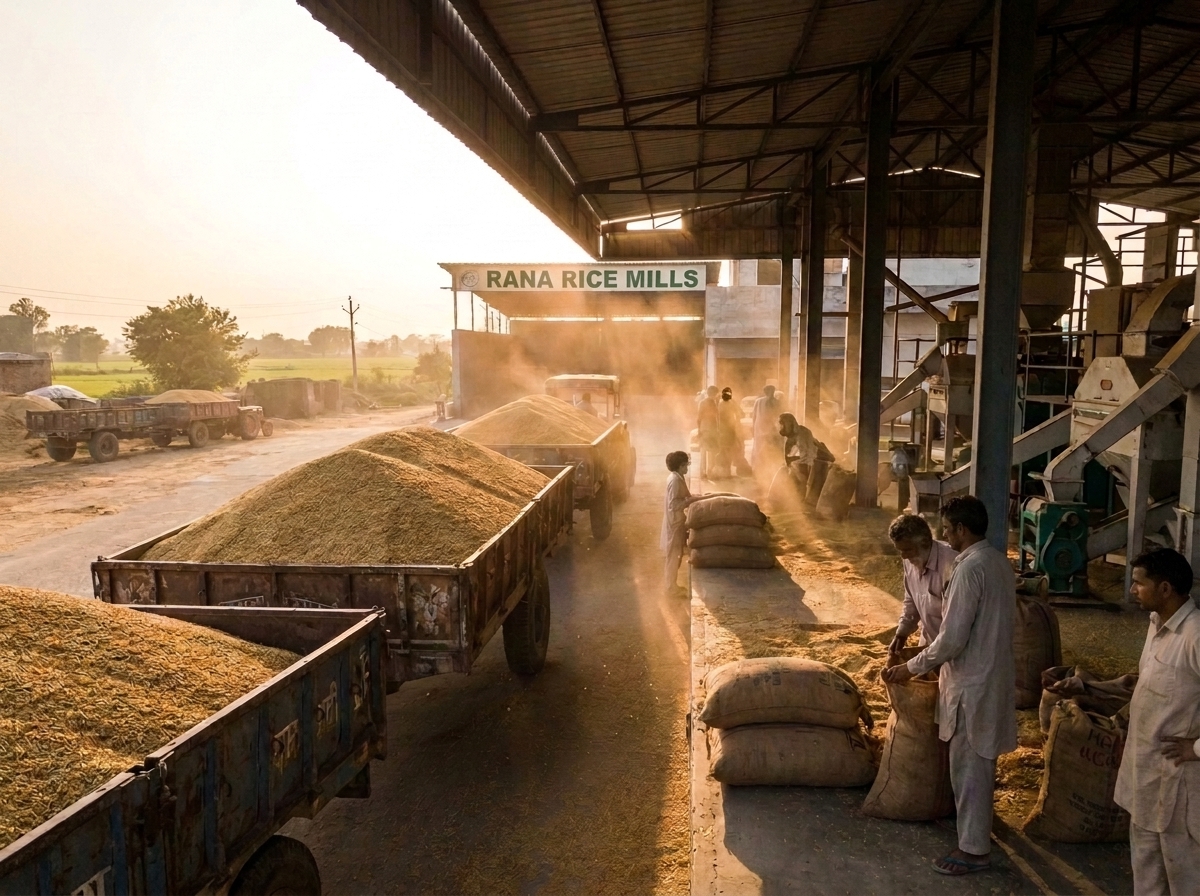
Every lot begins in the field. RRM works directly with a trusted network of local farmers and paddy suppliers across the Kalar Belt, sourcing quality-approved paddy — including PK-386, Super Kernel Basmati and Kainat 1121 — before it ever reaches the mill gate. Long-standing relationships with growers mean each consignment arrives with a known history, supporting consistent quality and traceability back to the farm.
-
 02
02
Step 02 of 12
Raw Material Inspection
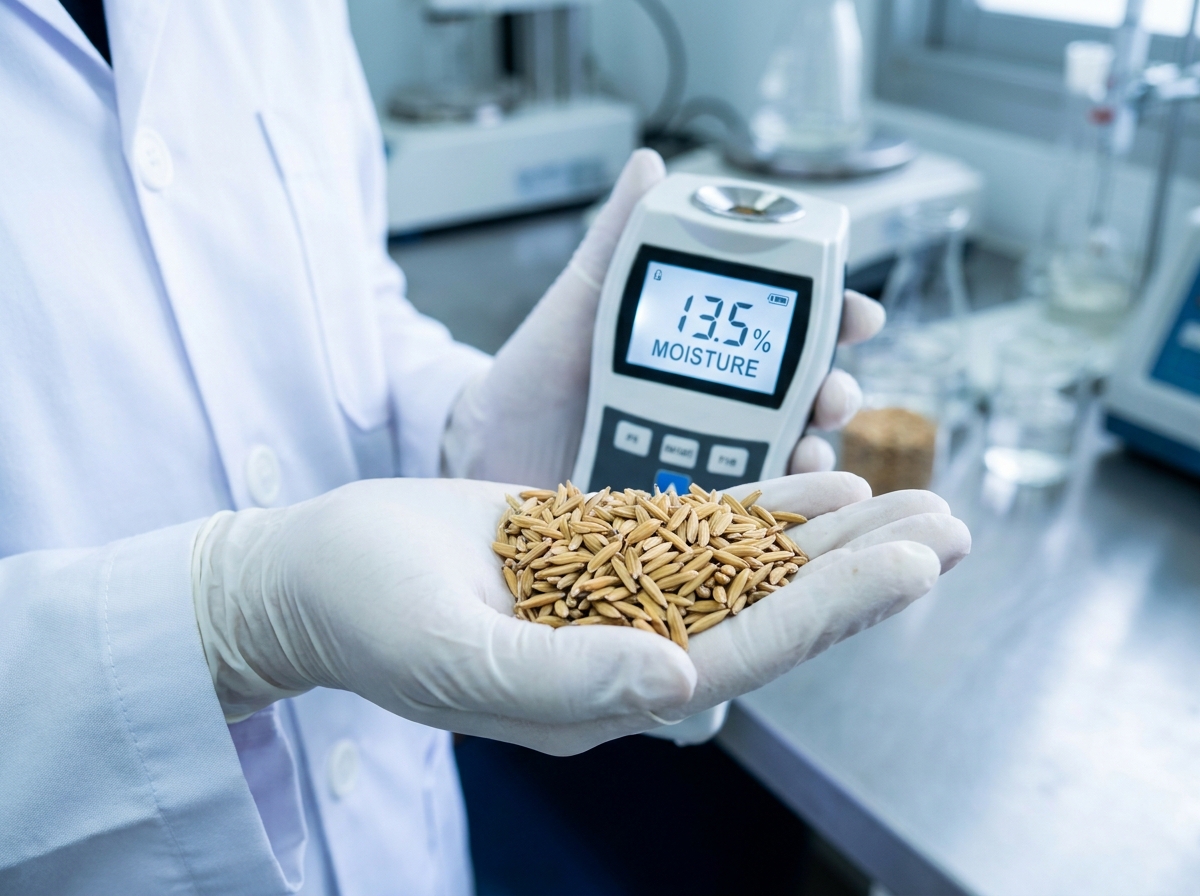
Before a single grain enters the plant, incoming paddy is checked against a strict set of parameters — moisture content, foreign matter, grain size and overall condition. Samples are drawn and assessed in the mill's own lab, and any lot that falls short of RRM's intake standard is flagged, so only sound, properly conditioned paddy moves forward into processing.
-
 03
03
Step 03 of 12
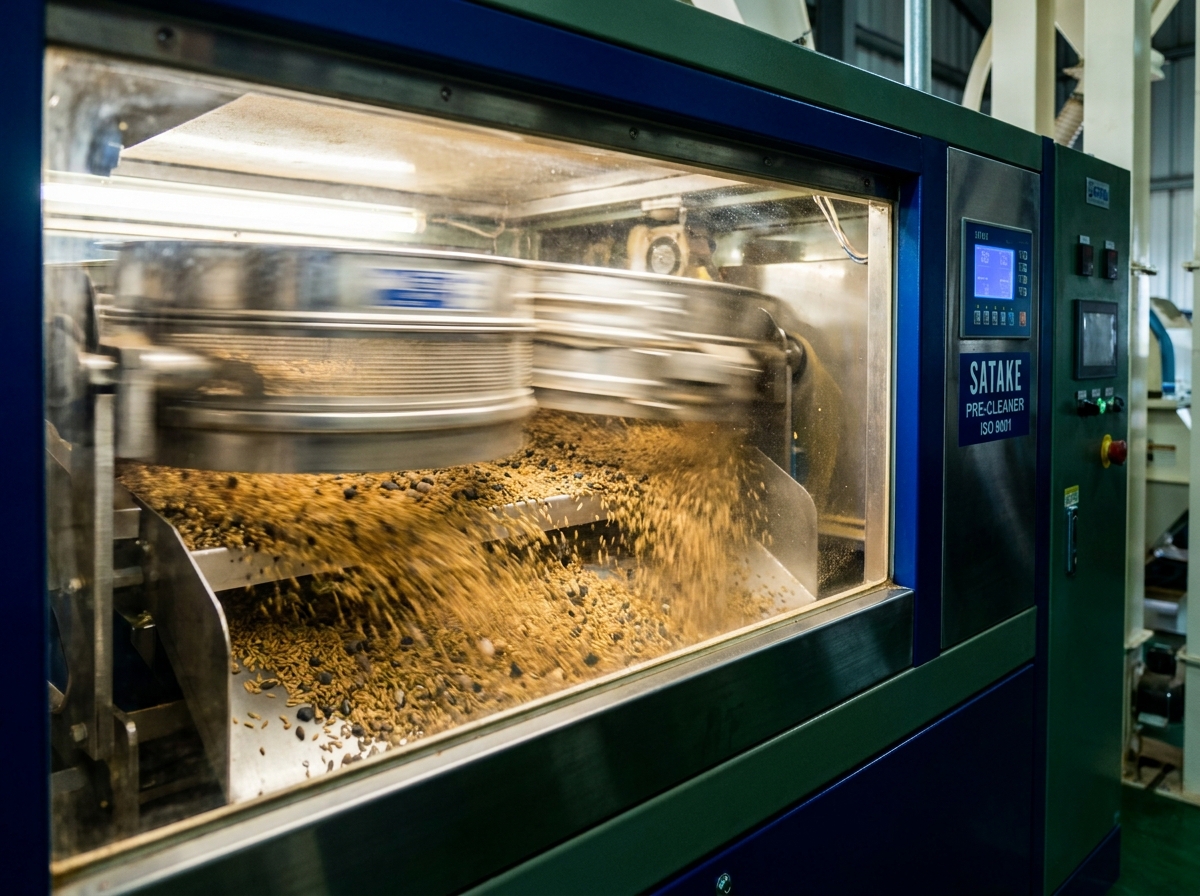
Pre-Cleaning
Raw paddy arrives carrying dust, stones, straw, chaff and other field debris. Pre-cleaning equipment sifts and separates this foreign material before milling begins, protecting downstream machinery from damage and ensuring the paddy reaching the husking stage is clean, uniform and ready for consistent processing all the way through the line.
-
 04
04
Step 04 of 12
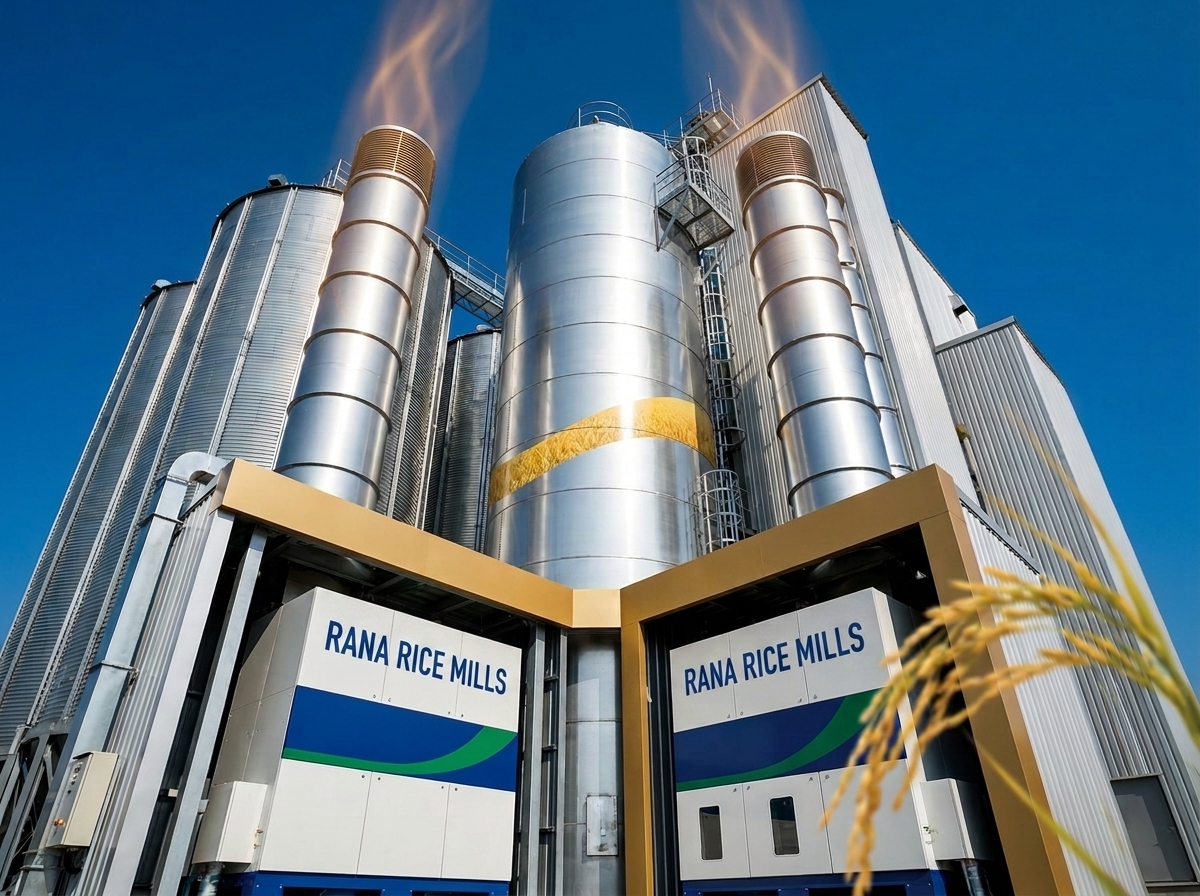
Drying
Paddy is passed through the drying section to bring moisture down to the level required for efficient, low-breakage milling. Controlled, gradual drying — rather than a single aggressive pass — helps preserve grain integrity and keeps milling recovery high, which matters directly for the yield and finished quality of every batch that follows.
-
 05
05
Step 05 of 12
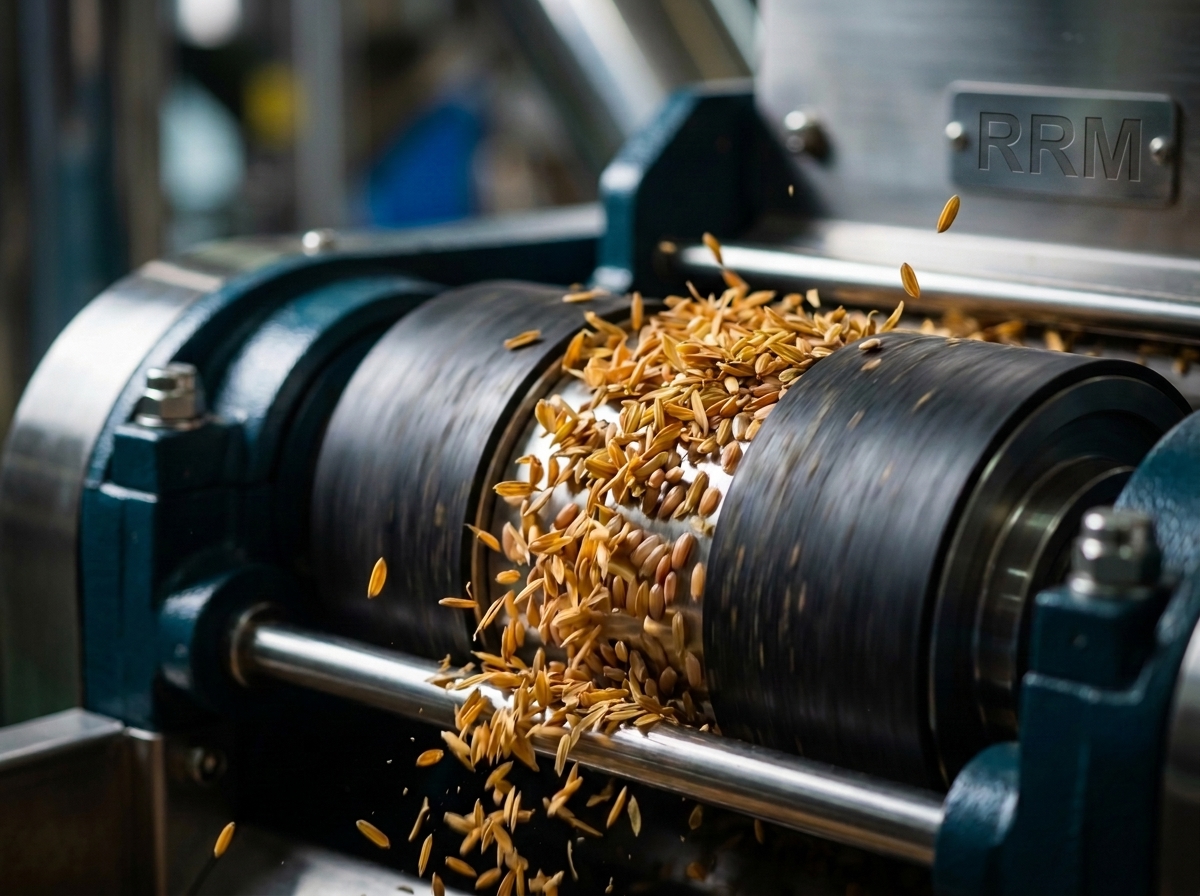
De-Husking
The paddy then moves through de-husking, where the outer husk is carefully stripped away to expose the brown rice underneath. The process is tuned to remove the husk cleanly while keeping the kernel intact, since any rough handling at this stage shows up later as broken or damaged grains further down the line.
-
 06
06
Step 06 of 12
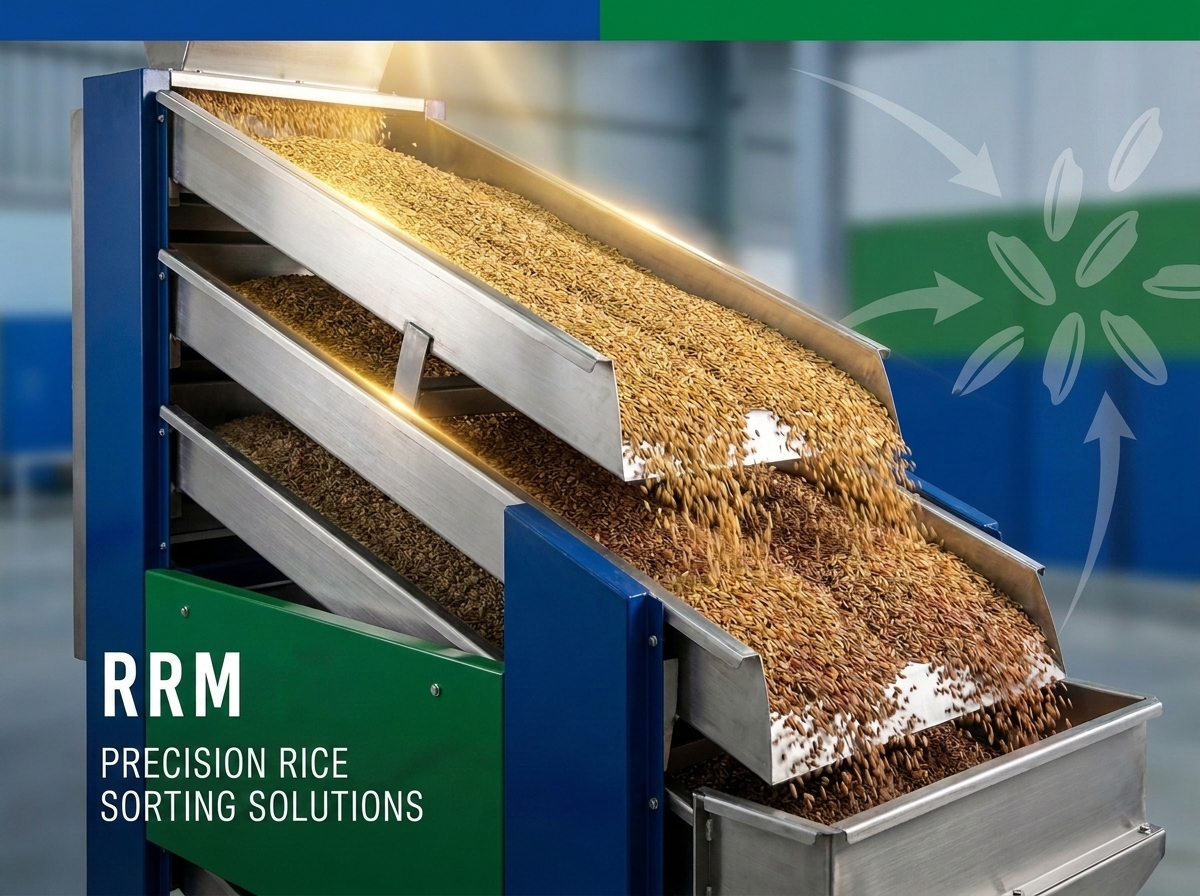
Paddy Separation
Not every grain loses its husk on the first pass. A paddy separator sorts de-husked brown rice from any paddy that remains, routing the unhusked grains back through the de-husker so nothing is wasted and every kernel eventually reaches the same finished standard before continuing on to whitening.
-
07
Step 07 of 12
Whitening & Polishing
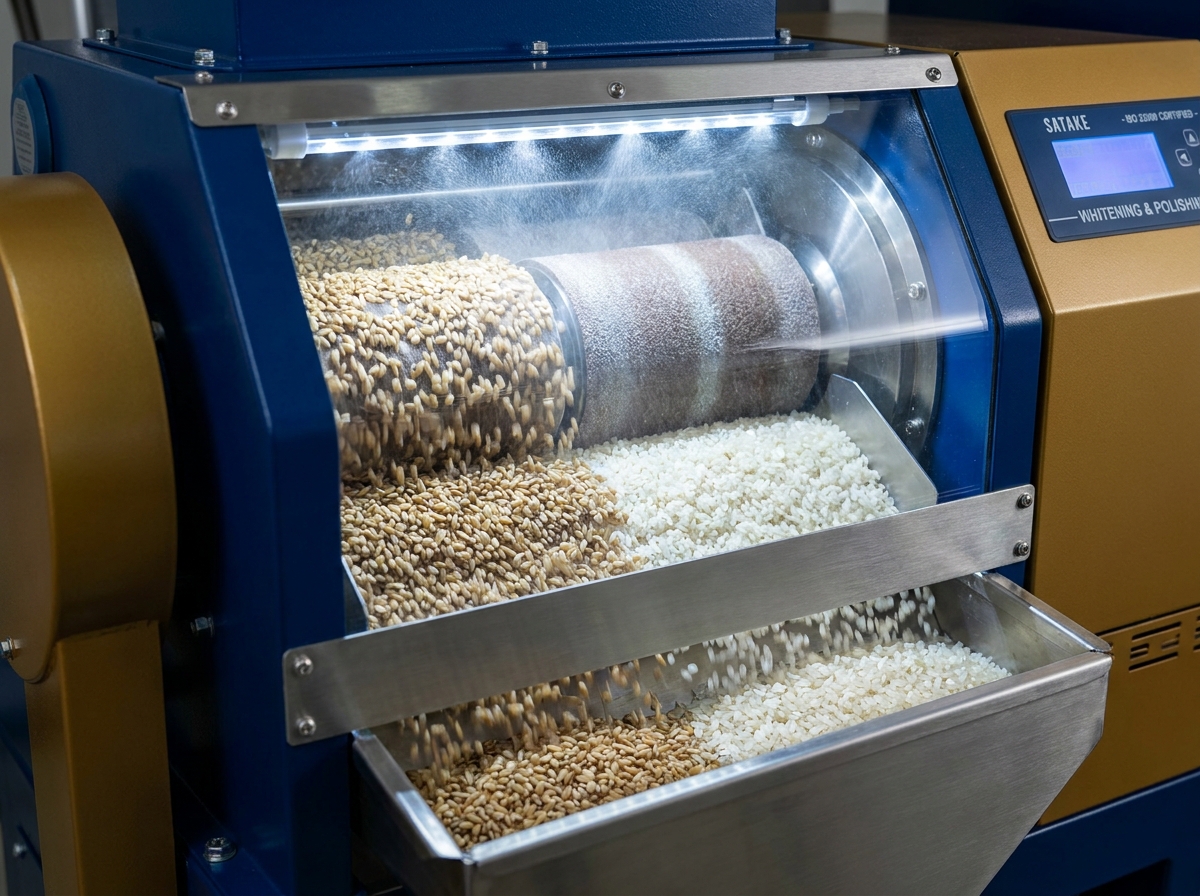
Brown rice then runs through the SATAKE whitening and polishing line, where the bran layer is removed in stages to achieve the whiteness, smoothness and finish the customer's grade calls for — from lightly milled to fully polished — while multiple gentle passes protect the grain from cracking or excessive breakage.
-
 08
08
Step 08 of 12
Grading & Sorting
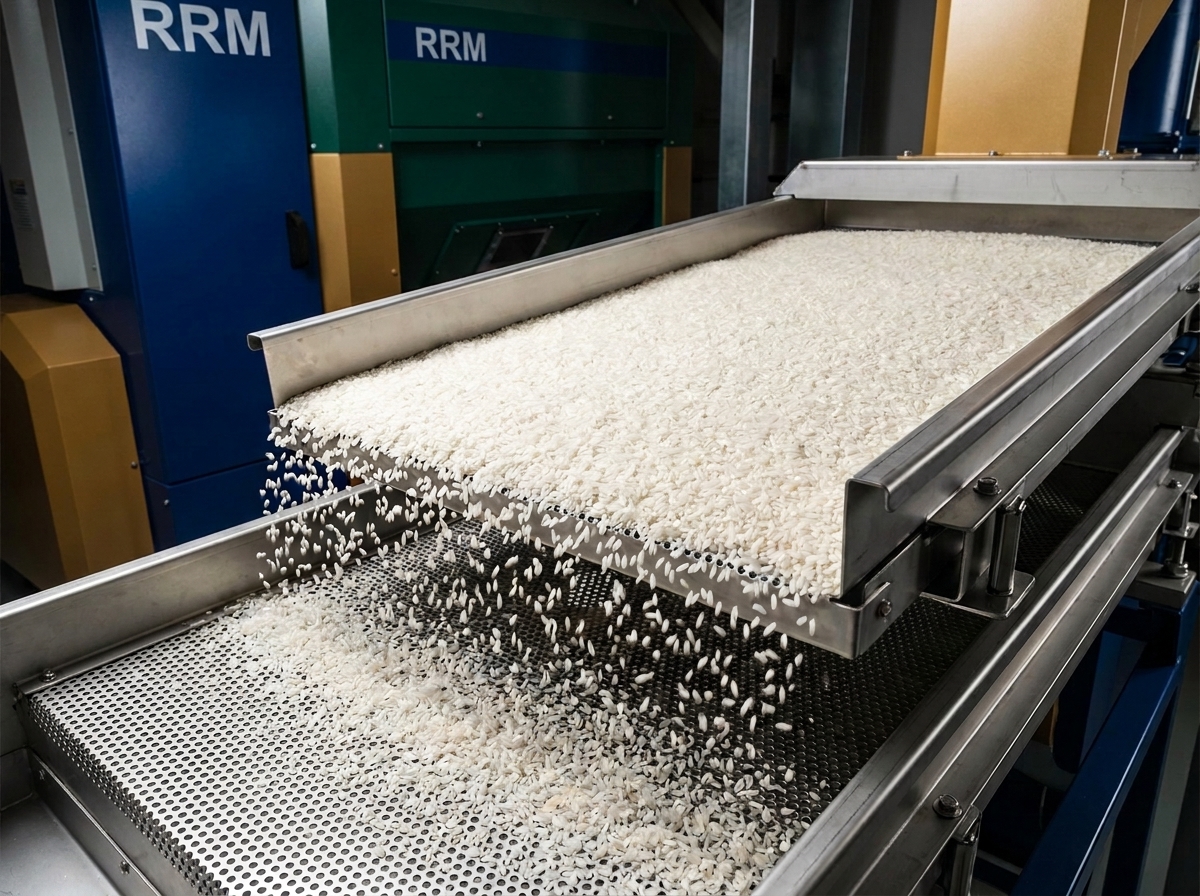
Milled rice is graded by length and size, separating whole grains from brokens so each batch is uniform to the required percentage. Length graders and sieves do this mechanically at scale, ensuring every bag that ships matches the grain-size and broken-percentage specification agreed with the buyer.
-
 09
09
Step 09 of 12
Color Sorting
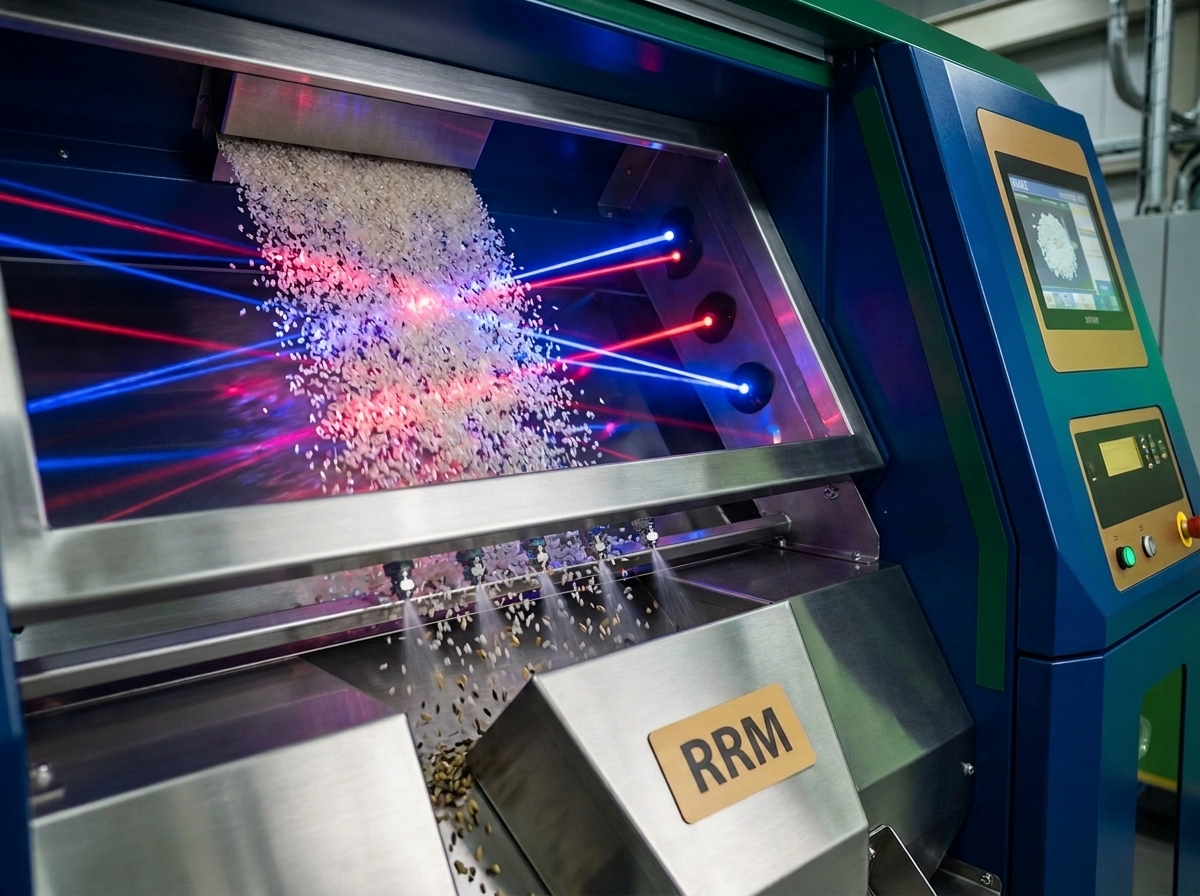
High-speed optical color sorters scan every grain passing through and eject any that are discolored, chalky, damaged or otherwise off-spec — work that would be impossible to match by eye at 30 tons an hour. This stage is one of the most decisive for the visual consistency export buyers expect.
-
 10
10
Step 10 of 12
Quality Inspection
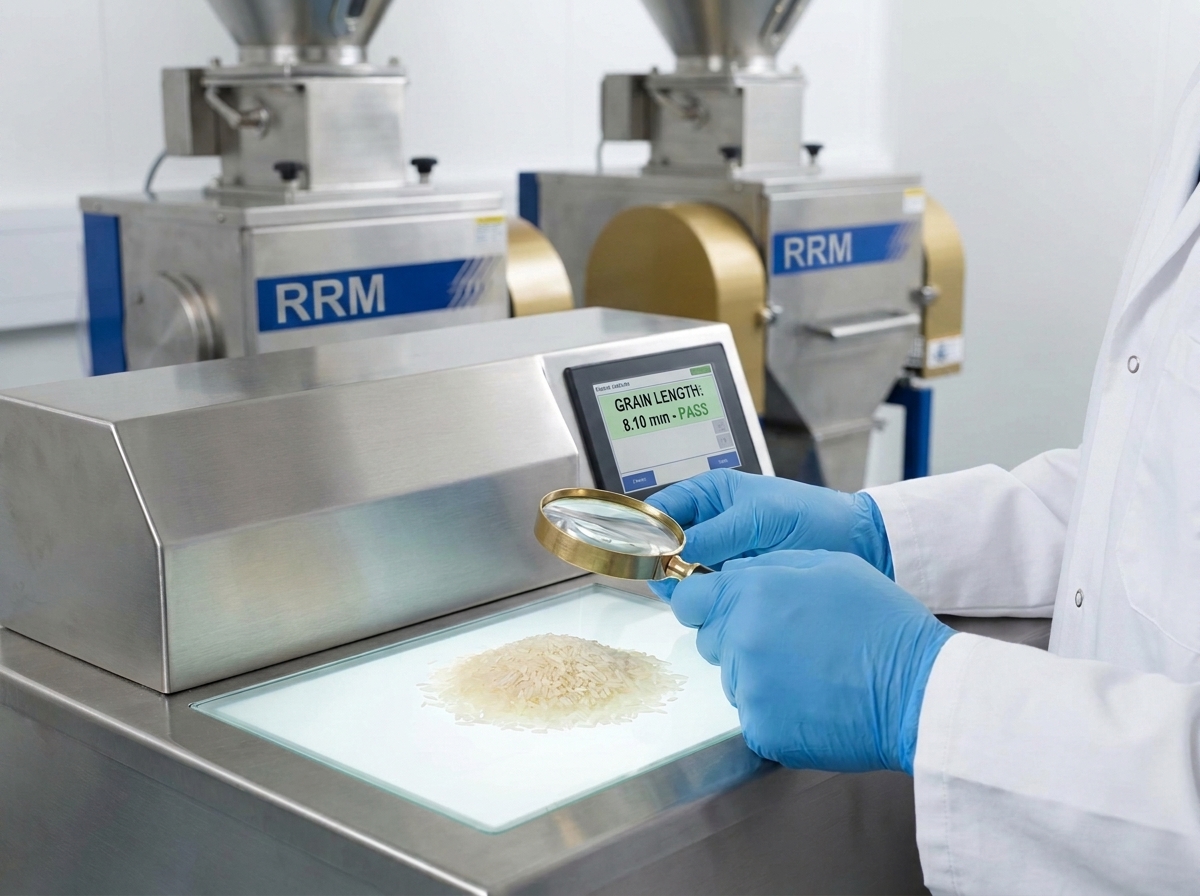
Before release, a sample from every batch is checked in RRM's in-house lab against the customer's agreed specification — covering physical parameters and Aflatoxin — with additional mycotoxin, water, radioactivity and chemical-residue testing routed to accredited external laboratories such as SGS, NIBGE and Eurofin when required.
-
 11
11
Step 11 of 12
Packaging
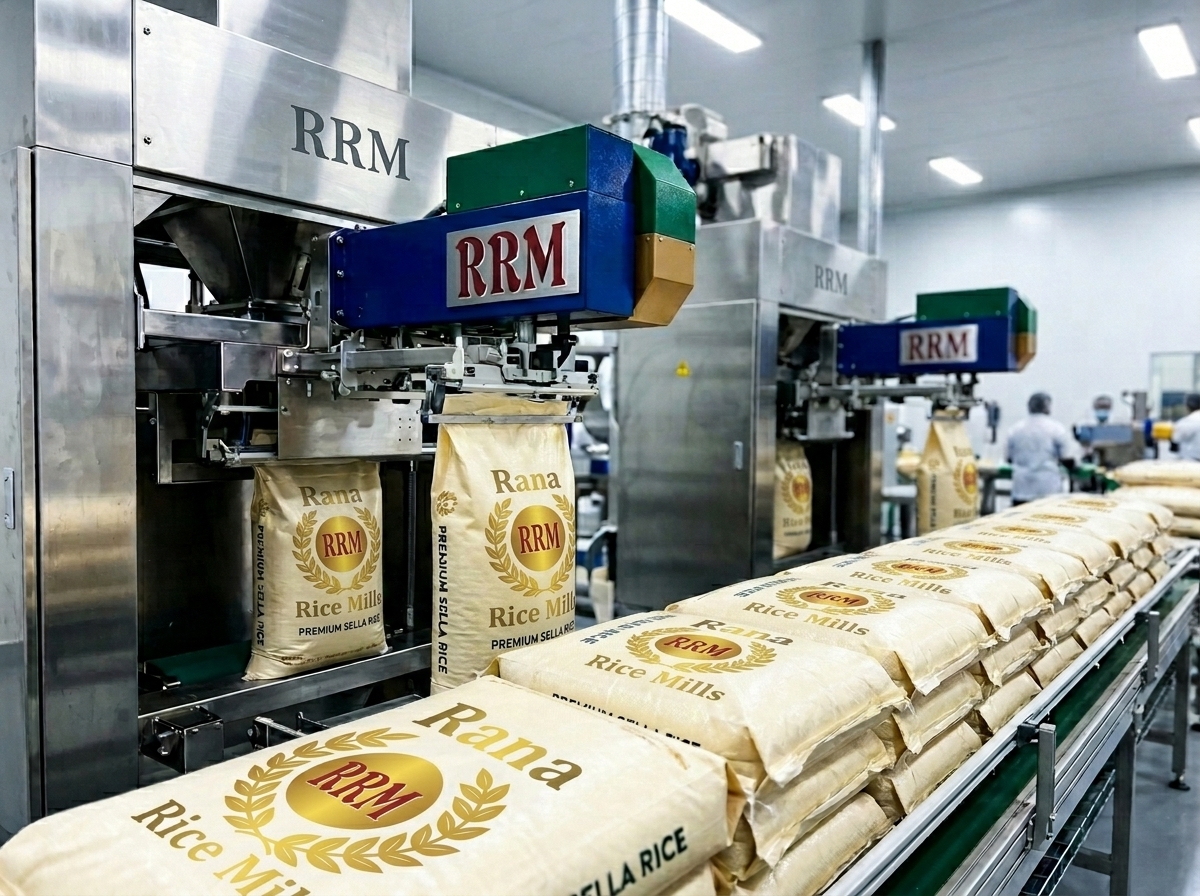
Approved rice is packed to the buyer's required format and weight — from retail-ready branded bags to open bulk and 1 & 25 MT jumbo bags for further processing — with packaging materials and labelling matched to the destination market's regulations and any private-label requirements the customer has specified.
-
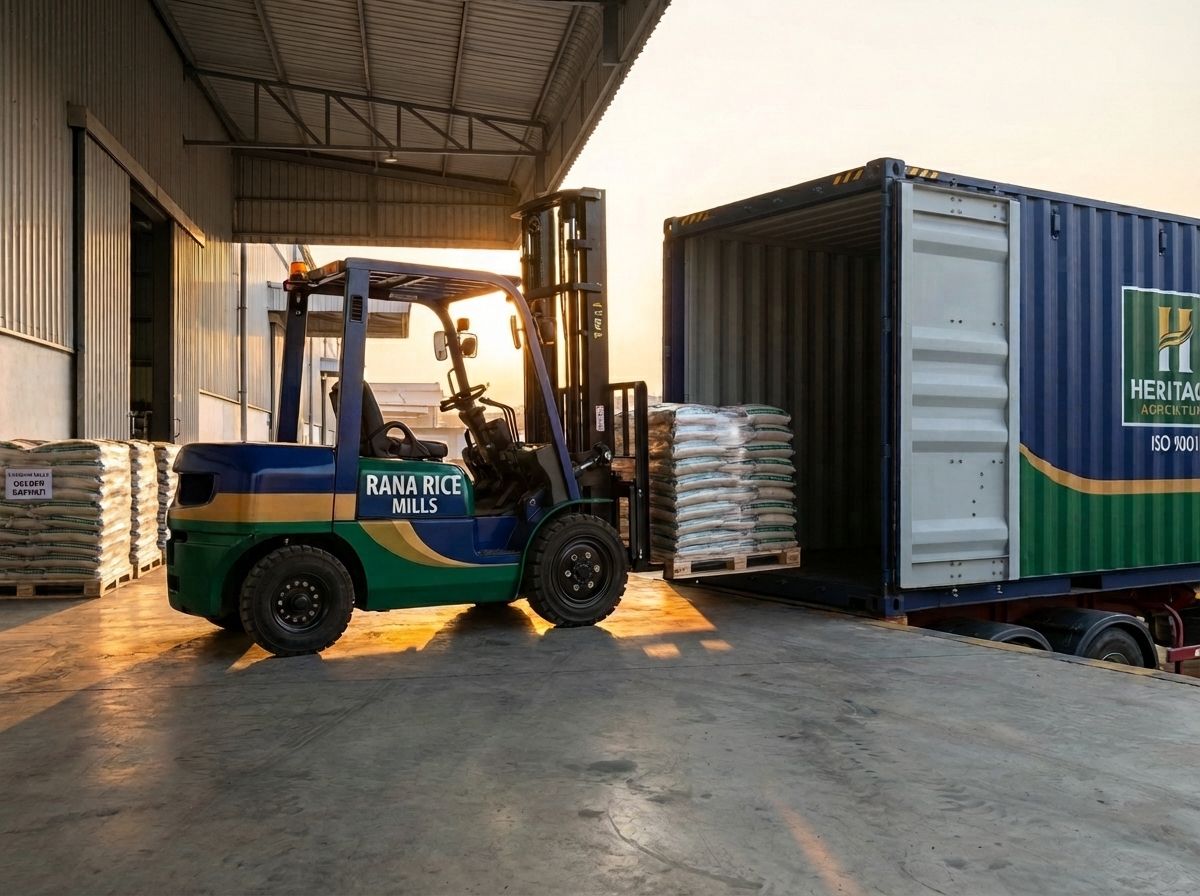 12
12
Step 12 of 12
Final Inspection & Dispatch
A final check confirms weight, packaging integrity and documentation before each load is sealed. Container loading and pre-shipment inspection can be arranged with third-party surveyors such as SGS or SCBS (Eurofin), or the buyer's own QA team, before the shipment leaves the mill for the port.
Tested at Every Stage
Quality isn’t the last step — it runs through all twelve
Physical parameters and Aflatoxin are checked and tested in the mill’s own lab. Other mycotoxins, water testing, radioactivity and chemical residue testing is outsourced to recognised and approved external laboratories.
3rd-party pre-shipment inspection and sampling is available as per global regulations and testing by SGS & SCBS (Eurofin), or by the buyer’s own quality assurance team on request.
Request a Sample Batch
See the results of this process for yourself — request samples or a spec sheet for your target grade.